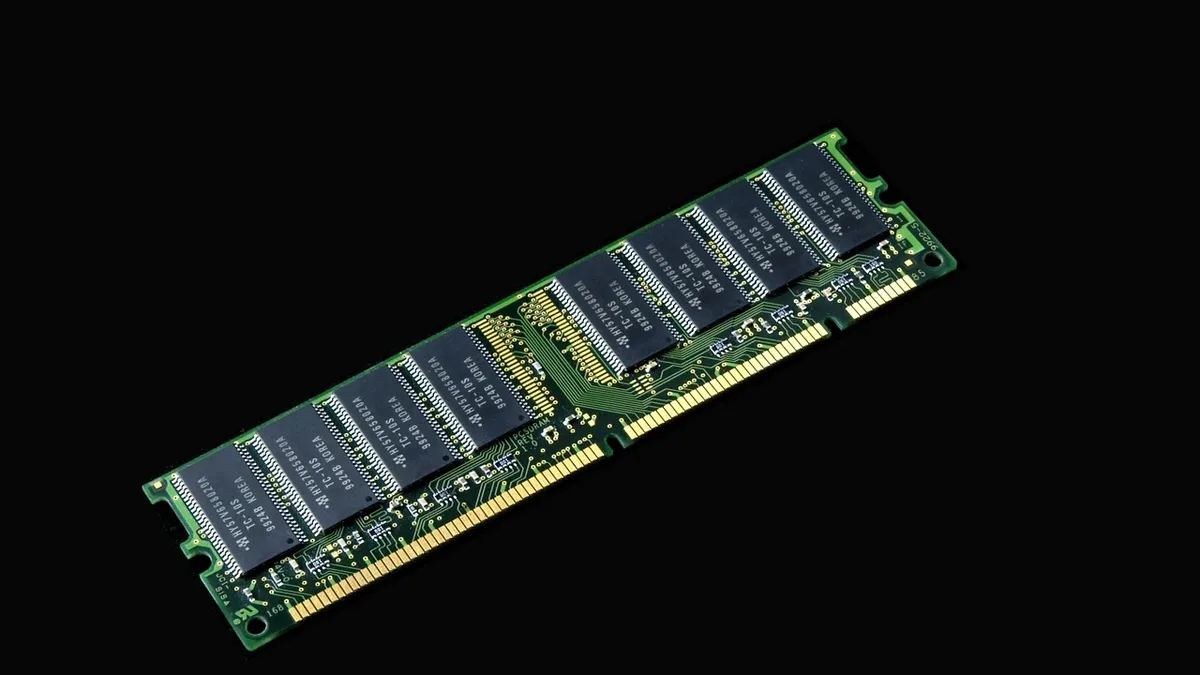
AMD Radeon Driver Bug Causes Continuous SSD Writes, Accelerating Wear
A bug in AMD's Radeon Adrenalin driver is causing the External Events Client to perform constant SSD writes, reducing drive lifespan by up to 2% on some models. AMD has confirmed a fix is planned for the Adrenalin 26.11.1 driver release expected later this month.
A persistent bug in AMD's Radeon graphics driver is accelerating solid-state drive wear on affected systems. The issue causes the driver's External Events Client Module, atieclxx.exe, to perform continuous writes to the SSD, with users reporting sustained activity of up to 5MB per second even when the PC is idle.
Tomasz Gawroński observed the utility performing 19.5 GB of I/O writes over a 12-hour period. Another user reported the same 5MB/s rate during idle, which translates to approximately 18GB of host writes per hour. Over a full day, that activity amounts to 432GB of writes. A month of uninterrupted operation could push the total close to 13TB.
The problem has been discussed by multiple users on Reddit for roughly 16 months. It drew renewed attention on November 8 when a user highlighted ongoing reports. The bug has been present since at least the Adrenalin Edition 26.7.1 driver released in June. AMD acknowledged the problem in a community forum response on October 21. The issue does not appear on all machines, and one individual, Jacob Fox, was unable to reproduce it.
Impact on SSD lifespan
The continuous writes are significantly reducing SSD health for those affected. One Radeon owner claimed the External Events Utility was consuming 1% of their SSD's health every month over a 16-month period. Darklinkpower said: "I just found out that the driver eats up 1% of my SSD health every month for 16 month."
AMD has admitted the GPU driver bug is causing the continuous writes. The company states the bug reduces SSD lifespan by 2% on certain models, citing the WD_Black SN8100 1TB as an example. For comparison, a user named Makaveli reported only 0.6 MB/s of write activity and 98% health on a WD 850X drive after three years of use.
Workarounds and temporary fixes
Users have identified two primary workarounds while awaiting an official fix. The first is to stop the AMD External Events Utility (EEU) service via the Windows services manager. The second is to disable Resizable Bar (ReBAR) in the system BIOS or driver settings.
ReBAR is a feature that can improve gaming performance by allowing the CPU to access the GPU's entire memory frame buffer more efficiently. However, its behavior varies. Nvidia implements it on a per-game basis, while AMD typically enables it globally. This difference means some games, like Horizon Zero Dawn Remastered and certain Ubisoft titles, have ReBAR off by default on other platforms, while others like Horizon Forbidden West have it on. AMD's blanket activation may contribute to the underlying issue. Some users with AMD CPU systems have also noted the EEU process is present, though it remains mostly idle.
AMD's response and timeline
AMD has confirmed it is investigating the issue with the aim of resolving it in a future driver release. A company representative, AMD_Matt, stated they were looking into it. Another representative, AMD_Vik, offered a more specific update, indicating the fix is planned for the Adrenalin 26.11.1 driver. AMD_Vik said: "should be fixed."
The fix was not included in the Adrenalin 26.20.2 release notes from October 30. No specific launch date has been committed, but the new driver revision is expected by the end of November. This is not the first such issue; a similar problem involving AMD chipset drivers writing log files excessively was reported last November. The expectation is that the fix for the Radeon driver will arrive in Adrenalin 26.11.1 later this month.