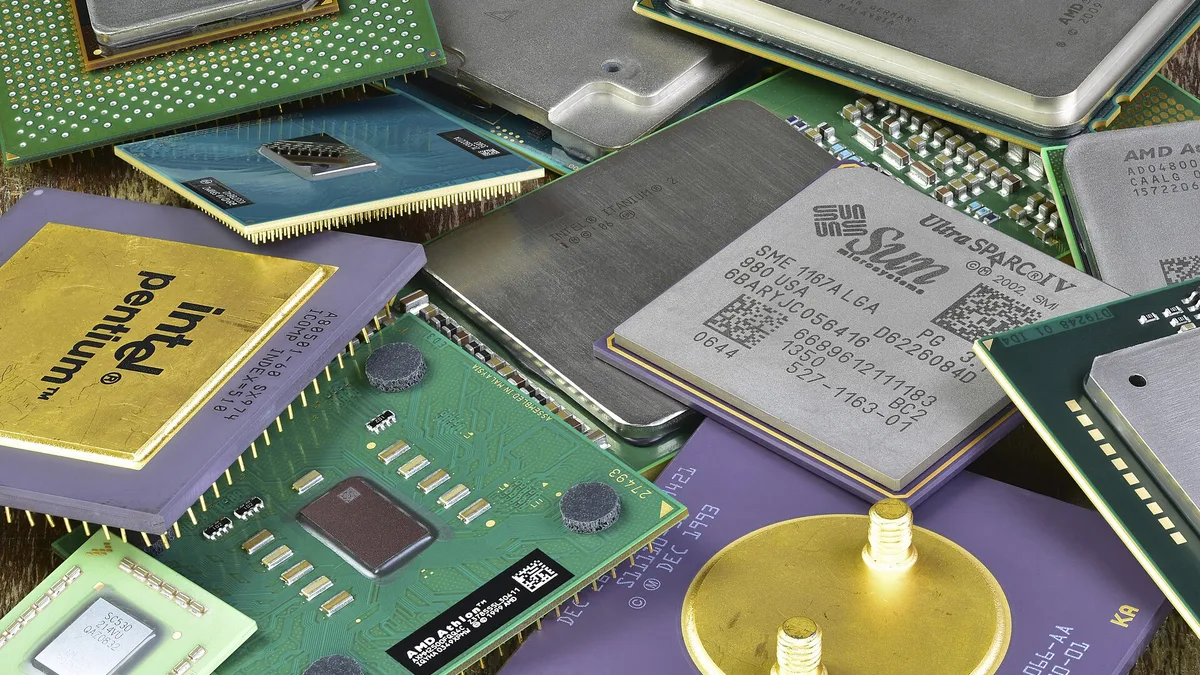
Cpus
| Core count | 2 to 128 (consumer to server) |
|---|---|
| Socket type | Varies by generation and manufacturer |
| Integrated graphics | Present or absent |
| Thermal design power (TDP) | 35W to 350W |
| Manufacturing process | 5nm to 10nm (as of early 2020s) |
| Instruction set architecture | x86-64, ARM, or other |
| First created | 1970s |
| Original use | General-purpose computation in electronic systems |
Origin and history
The central processing unit (CPU) originates from the United States, with its conceptual foundations laid in the mid-20th century. Early computing devices used vacuum tubes and electromechanical systems for processing, but the first true single-chip microprocessor was introduced in the early 1970s. This innovation integrated the core computational functions of a computer onto a single integrated circuit, a pivotal moment in computing history. The development was driven by the need for more compact and efficient control logic for calculators and other embedded systems. Throughout the subsequent decades, the CPU evolved from simple, slow processors to highly complex devices containing billions of transistors. The geographical center of CPU design and manufacturing has since expanded to include significant contributions from companies and research in East Asia and Europe.
What it is designed for
A CPU is designed to execute a sequence of stored instructions called a program, which constitutes the software running on a computer. Its primary function is to perform arithmetic, logic, controlling, and input/output operations as specified by these instructions. This makes it the fundamental component responsible for interpreting and carrying out the commands of most computer hardware and software. It is engineered to fetch instructions from memory, decode them, execute them, and then write back the results. While crucial for overall system performance, the CPU's design is for general-purpose computation, meaning it handles a wide variety of tasks rather than being optimized for one specific function. Its architecture dictates how efficiently it can process the diverse workloads presented by operating systems, applications, and user interactions.
Development and versions
CPU development has been characterized by a long-term trend known as Moore's Law, observing a historical doubling of transistors on a chip roughly every two years. Early versions were built on architecture types like Complex Instruction Set Computing (CISC) and Reduced Instruction Set Computing (RISC), which defined how instructions were processed. Major version milestones include transitions from 8-bit to 16-bit, then 32-bit, and now predominantly 64-bit processors, which determine the amount of data they can handle at once. Parallel processing has become a dominant development theme, evolving from single-core designs to multi-core CPUs that contain several independent processing units on one chip. Manufacturers continually develop new microarchitectures, which are specific designs that implement an instruction set, with names like "Zen" from AMD or "Core" from Intel. Advancements also persistently focus on shrinking the semiconductor manufacturing process node, measured in nanometers, to improve efficiency and performance.
Pros and cons
A primary advantage of a modern CPU is its versatility, capably managing the broad and unpredictable mix of tasks required by a general-purpose computer, from running the operating system to spreadsheet calculations. However, a significant con is that for the specific task of rendering real-time 3D graphics in games, a CPU is generally far less efficient per dollar than a dedicated graphics processing unit (GPU). Users who prioritize high frame rates in modern video games often regret allocating too much of their budget to a top-tier CPU while pairing it with a mediocre GPU, as this creates a severe bottleneck. A common mistake is overestimating the CPU's direct impact on frame rate, particularly at higher visual settings and resolutions where the GPU workload dominates. Furthermore, high-end CPUs can consume considerable power and generate significant heat, requiring robust and sometimes costly cooling solutions. On the pro side, a sufficiently powerful CPU is essential for high frame rates in less graphically intense games like competitive esports titles and for preventing stutter in complex simulation games.
Who it suits
A high-performance CPU suits users whose workloads rely heavily on serial processing speed and complex computational tasks outside of 3D rendering. This includes software developers compiling large codebases, video editors encoding and processing footage, and users running scientific simulations or complex computational models. It also suits competitive esports gamers who play at very low graphical settings and high resolutions, where the CPU is often the primary determinant of achieving extremely high frame rates. System builders creating workstations for audio production, large-scale data analysis, or hosting multiple virtual machines will also prioritize CPU capability. Conversely, a budget-oriented CPU paired with a capable GPU suits the typical gamer playing at 1080p or higher resolutions with high visual settings, where the GPU is the main factor for frame rate. Users with basic computing needs, such as web browsing, office applications, and media consumption, are well-suited by modern low-power or entry-level CPUs.
Latest Cpus news
Latest reporting
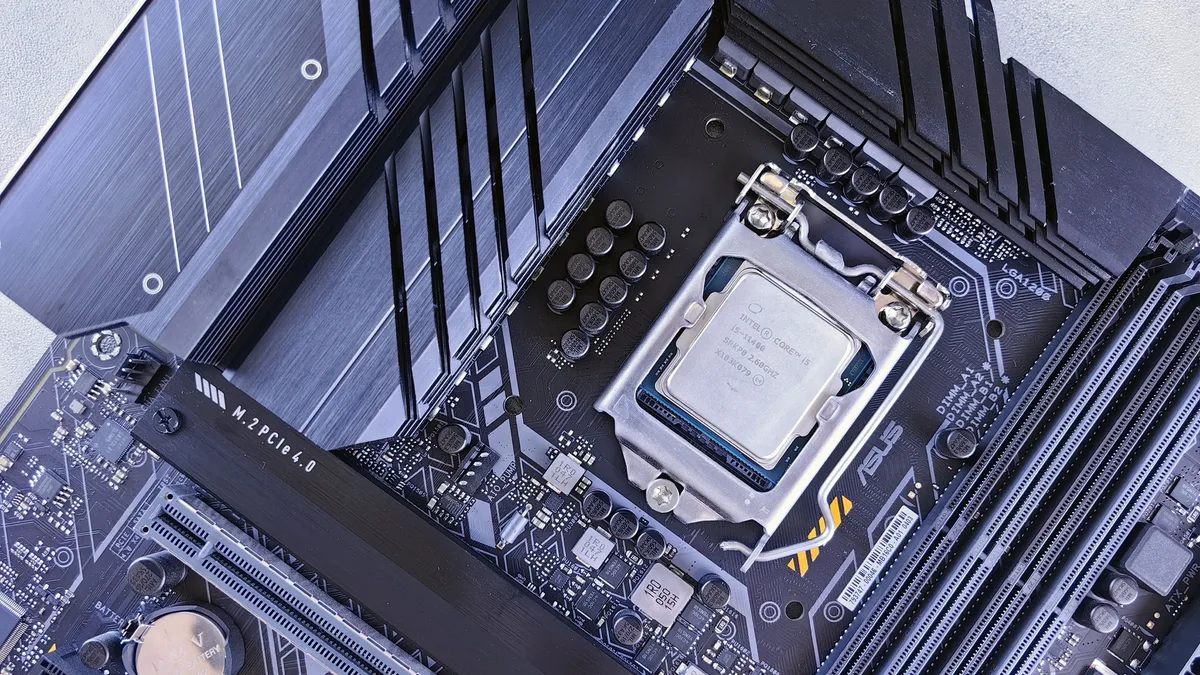
ASRock Z990 Motherboards for Intel Nova Lake Begin Shipping
ASRock has started shipping its Z990 chipset motherboards, designed for Intel's upcoming Nova Lake desktop CPUs, with several model names confirmed...
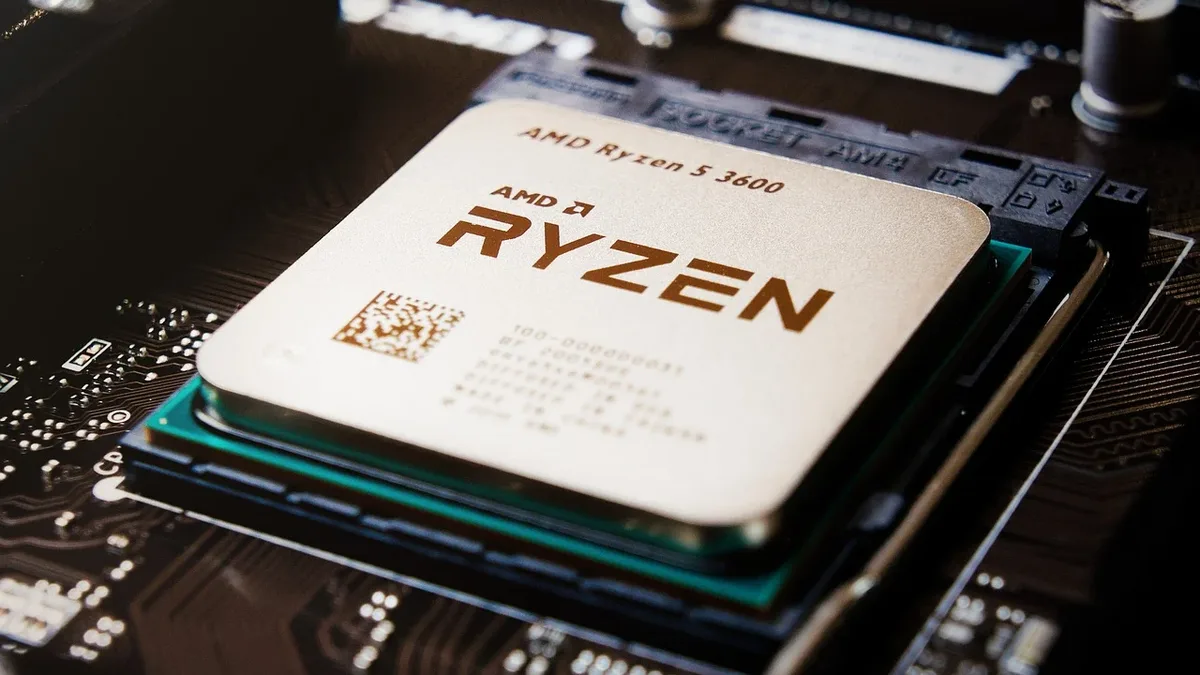
AMD Claims EPYC Venice Server CPU Outperforms NVIDIA Vera
AMD's new white paper claims its 6th Gen EPYC 9006 'Venice' server CPUs deliver over twice the performance of NVIDIA's Vera in a key benchmark.
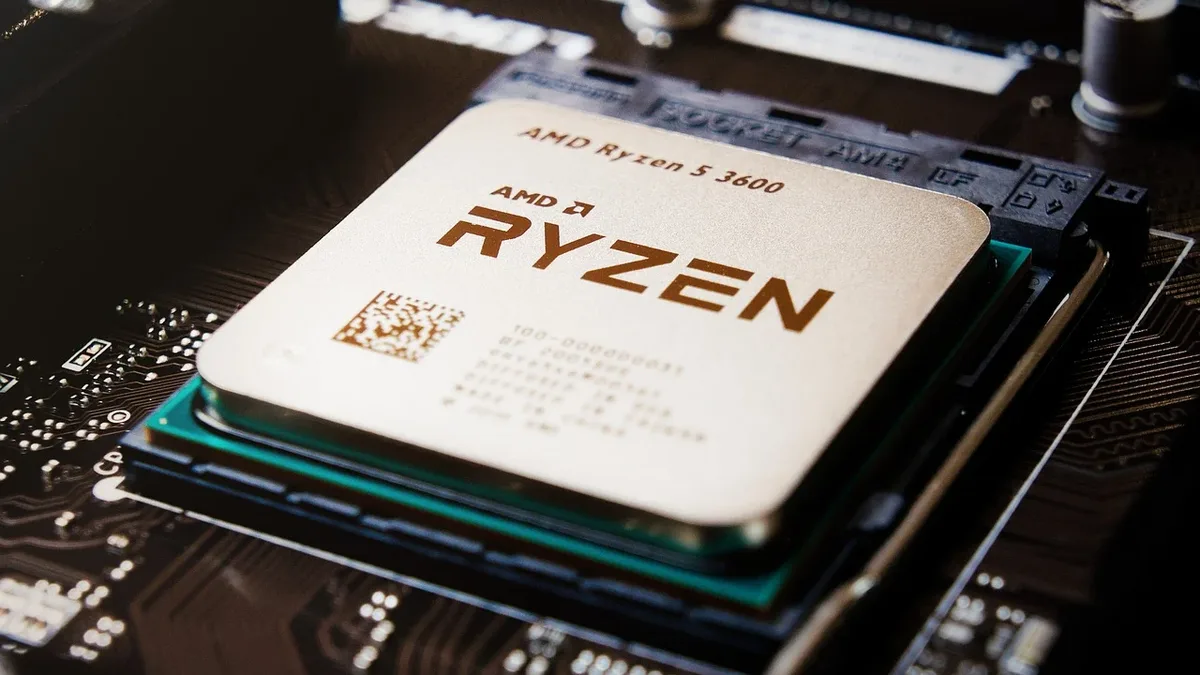
AMD Launches Ryzen 5 5500F and Ryzen 5 7500 Budget CPUs
AMD has released two new budget processors, the $99 Ryzen 5 5500F and $189 Ryzen 5 7500, to provide more affordable entry points for PC builders...
Asus ProArt P14 Shines at Gamescom 2026
At Gamescom 2026, the author tested a range of laptops powered by Nvidia’s RTX Spark SOC. The machines, all built by different manufacturers, feature...
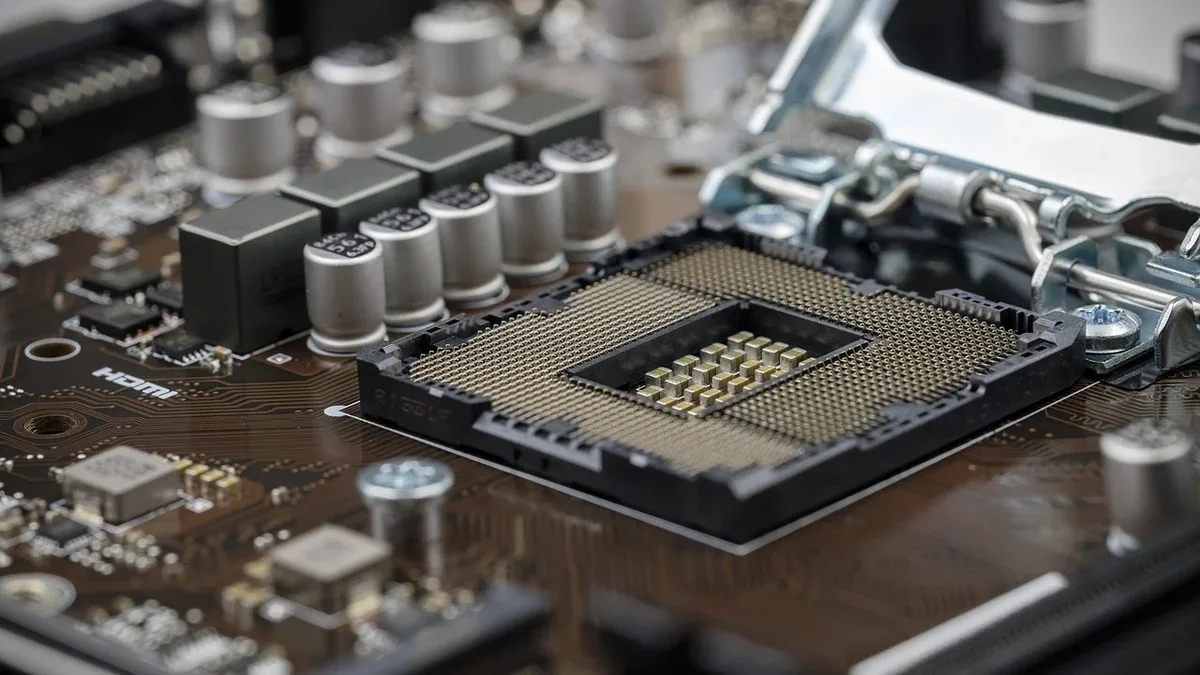
AMD Confirms AM5 Support for Olympic Ridge
AMD updated its technical documentation on August 26, 2026, confirming that the upcoming Ryzen 10000 series "Olympic Ridge" CPUs will run on the AM5...

Intel's Next-Gen Nova Lake Chips May Skip Game-Boosting X3D Cache Rival for Mobile SKUs
A new rumor suggests that Intel's upcoming Nova Lake CPUs may not feature the company's game-boosting X3D cache rival, bLLC, on mobile SKUs. Instead...