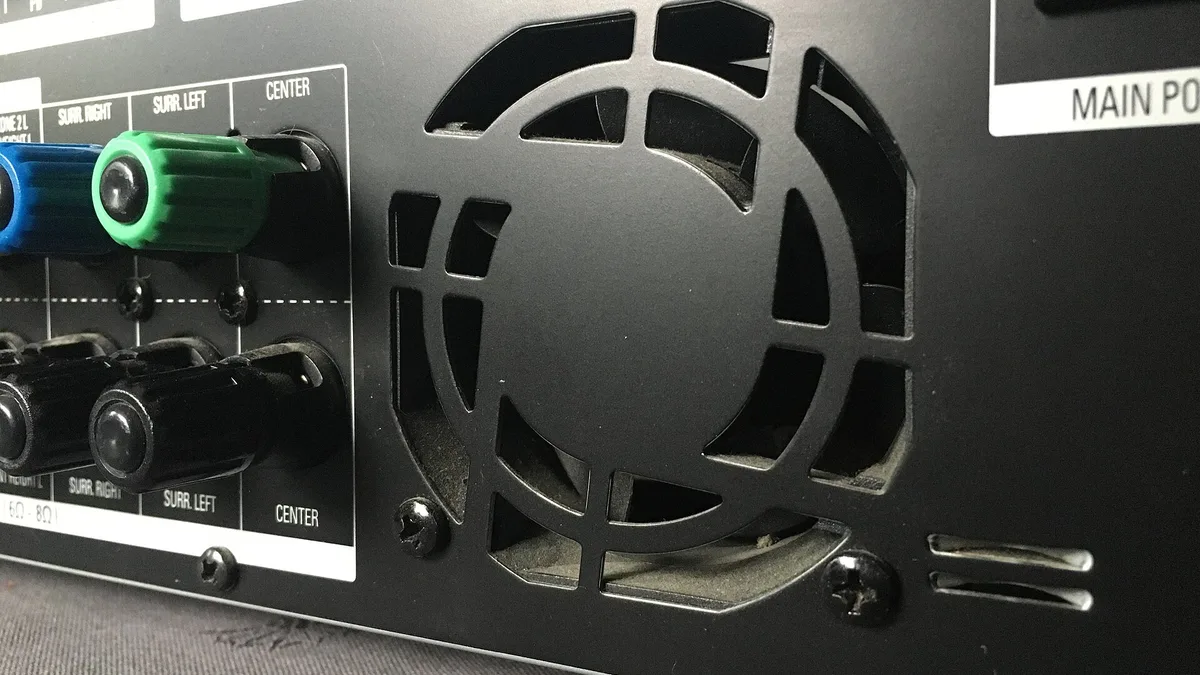
Cooling
| Cooling type | Air, Liquid, Passive |
|---|---|
| Heat dissipation capacity | Measured in watts (TDP) |
| Noise level | Measured in decibels (dB(A)) |
| Compatibility | CPU socket or GPU model |
| Dimensions | Height, width, radiator size |
| Fan speed | RPM range |
| Warranty | Length in years |
Origin and history
The concept of dedicated cooling for mechanical and electronic systems originates from the industrial revolution of the 19th century, with early applications in large steam engines and combustion motors. The specific practice of cooling computer components, however, emerged in the latter half of the 20th century alongside the development of the microprocessor. Initial cooling solutions were passive, relying on simple heat sinks to dissipate the relatively low thermal loads of early integrated circuits. The need for active cooling intensified in the 1990s as CPU clock speeds increased dramatically, leading to widespread adoption of the standardized axial fan attached to a metal heat sink. This period saw the formalization of cooling as a critical PC component category, with dedicated manufacturers emerging to serve the growing demand. The pursuit of higher performance and lower noise subsequently drove innovation into alternative methods like liquid cooling, which adapted principles from industrial and automotive applications for desktop computers.
What it is designed for
Cooling components are designed to manage and remove waste heat generated by electronic parts to maintain safe operating temperatures. Their primary function is to prevent thermal throttling, a protective mechanism where a processor reduces its clock speed to avoid damage, which directly impacts performance. By maintaining lower temperatures, cooling systems enable components like the CPU and GPU to sustain their maximum designed clock speeds for longer periods under load. Effective cooling also contributes to system stability, as excessive heat can cause system crashes, data corruption, and hardware failures over time. Furthermore, cooling solutions aim to extend the operational lifespan of electronic components by reducing the long-term thermal stress on silicon and other materials. A secondary, but increasingly important, design goal is to achieve this heat removal with minimal acoustic noise, balancing performance against user comfort.
Development and versions
The development of computer cooling has progressed from entirely passive convection to sophisticated active systems. The first major version was the simple aluminum finned heat sink, which relied on case airflow, followed by the ubiquitous combination of a cast or extruded aluminum heat sink paired with a DC brushless fan. This air cooling paradigm evolved with the introduction of copper bases and heat pipes, which greatly improved thermal conductivity and allowed for more compact, efficient radiator designs. Liquid cooling, initially a niche enthusiast practice, developed into mainstream all-in-one (AIO) closed-loop systems that simplified installation compared to custom open loops. Recent versions include advanced air coolers with dual towers and multiple fans, sub-ambient cooling via thermoelectric (Peltier) devices, and even phase-change cooling systems that operate on principles similar to refrigeration. The development trajectory consistently focuses on increasing thermal dissipation capacity, improving reliability, and reducing noise across each iteration.
Pros and cons
The primary pro of standard air cooling is its high reliability and simplicity, with no risk of liquid leakage and typically a lower point of failure. A significant con is that its cooling capacity is ultimately limited by ambient room temperature and case airflow, making it less effective for extreme overclocking or in poorly ventilated environments. Users often regret choosing a low-profile or undersized air cooler for a high-TDP processor, resulting in constant thermal throttling and loud fan noise under moderate workloads. Liquid cooling, particularly AIO systems, offers the pro of generally superior heat dissipation for high thermal loads and can often provide a quieter acoustic profile by locating radiator fans away from the core components. A common con and point of failure for liquid systems is the eventual permeation of coolant, pump failure, or the risk of catastrophic leakage, which can damage other components. The frequent mistake is prioritizing aesthetic appeal over radiator size and fan quality, leading to paying a premium for a visually striking cooler that performs worse than a modestly priced, high-end air cooler.
Who it suits
Standard air cooling suits the vast majority of users who are not engaged in extreme overclocking, including office PCs, mainstream gaming systems, and home theater setups where reliability is paramount. It is particularly well-suited for budget-conscious builds where every dollar must directly contribute to frame rate, as a competent air cooler allows a CPU to maintain its boost clocks without unnecessary expense. Large, dual-tower air coolers suit performance-focused builders who prioritize long-term reliability and want near-top-tier cooling without the complexity or potential failure points of liquid systems. All-in-one liquid cooling suits enthusiasts and overclockers who are pushing their components beyond standard specifications and require the additional thermal headroom that a large radiator can provide. Custom open-loop liquid cooling suits a niche group of builders for whom the project of building and maintaining the system is itself a hobby, beyond just the performance outcome. Ultimately, the choice suits different users based on their tolerance for risk, maintenance, noise, and the specific thermal demands of their chosen components.
Latest Cooling news
Latest reporting
Geekom A5 2027 Mini PC Launches for Productivity
Geekom has launched the A5 2027 Edition mini PC, featuring an AMD Ryzen 7 7730U processor and a new IceBlast 3.0 cooling system designed for 24/7...
Fractal Design Define One Case Review
KitGuru reviews the Fractal Design Define One case, finding its closed-front design delivers effective cooling and quiet operation for $154.99...
CORSAIR iCUE LINK TITAN II 360 RX RGB
CORSAIR has released the iCUE LINK TITAN II 360 RX RGB, a 360-mm all-in-one cooler featuring the FlowDrive 2 pump, RX II RGB fans, and an optional...

ASRock X870E Taichi White Motherboard Review: A Flagship-Class Hardware at a Lower Price
The ASRock X870E Taichi White motherboard offers improved aesthetics, 10 GbE, and active VRM cooling, making it a great option for those looking for...