SpaceXAI GB300 GPU deployment hits 220,000 units at Colossus
SpaceXAI is deploying Nvidia's GB300 GPUs in waves, with 220,000 now operational and a total of 1.44 million GPUs targeted by year-end, supported by a new

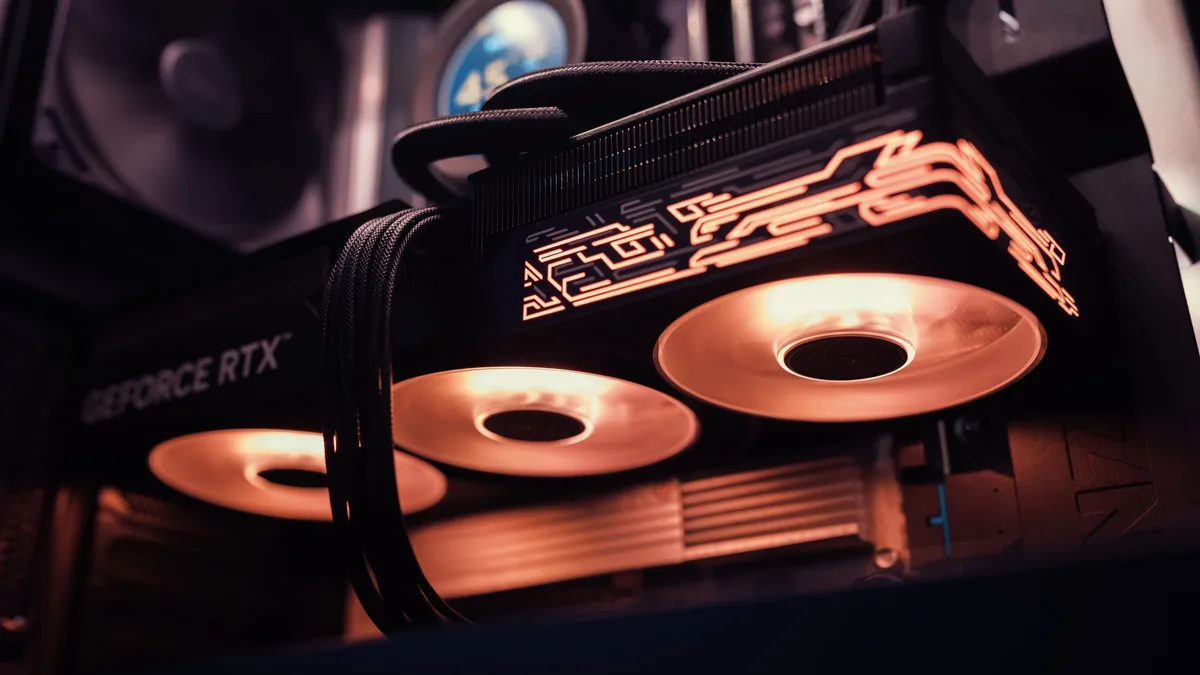
SpaceXAI is deploying Nvidia GB300 GPUs in waves, building on existing GPU counts at its Colossus 1 and 2 data centers. Elon Musk announced on X that 220,000 Nvidia GB300 GPUs will be operational by next week, with another 220,000 coming online in November. A third wave of 220,000 GB300 GPUs is possible by late December, qualified as 'if we get lucky.'
These additions are part of a plan to add 660,000 AI GPUs this year. Combined with the existing fleet, this would bring SpaceXAI's total operational GPU count to nearly 1.44 million. The GB300 belongs to Nvidia’s Blackwell Ultra generation.
The company's current operational hardware is split across two facilities. Colossus 1 features a combination of older Hopper and newer Blackwell GPUs, while Colossus 2 solely uses Blackwell GPUs.
| Data Center | H100 GPUs | H200 GPUs | GB200 GPUs | GB300 GPUs |
|---|---|---|---|---|
| Colossus 1 | 150,000 | 50,000 | 30,000 | 0 |
| Colossus 2 | 0 | 0 | 110,000 | 440,000 |
This existing fleet implied a total of 780,000 GPUs before the new deployment waves began. The mixed hardware has different memory systems, power profiles, and performance characteristics. Newer GPUs may handle frontier-model training, while older systems serve inference, experimentation, or smaller training jobs. Colossus 1 is reportedly inefficient for training Grok, and Musk has rented out capacity there to Anthropic for inference.
Power infrastructure and environmental context
SpaceXAI is building a permanent 1.2-gigawatt power plant in Southaven to support its expanding GPU fleet. The company brought its own power to address data center build-out power issues. The permanent plant will use 41 turbines authorized under a Clean Air Act permit granted in March 2026 and will come online over a span of one year.
This move addresses prior reliance on temporary gas turbines and regulatory scrutiny. A lawsuit was filed against SpaceXAI for running unpermitted gas turbines. The company promised to remove them and says it will begin removing temporary turbines as permanent generation becomes available. It plans to replace 69 temporary mobile turbines in Southaven by July 2027.
Mississippi regulators counted 69 temporary turbines at the Southaven site by July. An investigation cited preliminary local monitoring that found elevated fine-particle readings, though SpaceXAI says local air quality meets or exceeds federal standards. Residents and environmental groups have challenged the permitting strategy. Neighborhood complaints about persistent low-frequency noise have been reported near the Colossus 2 site.
Hardware mix and operational realities
GPU totals do not reveal how many chips are continuously available for training, inference, maintenance, or outside customers. A chip can be delivered without being operational. Servers must be assembled, connected to high-speed networking, supplied with electricity, integrated with cooling, and tested under load. The most meaningful milestone is sustained operation across an entire cluster without excessive failures or idle hardware.
SpaceXAI has already shown it can deploy infrastructure quickly. Colossus 1 grew from an industrial building into a major AI system on a timetable that drew praise from Nvidia leadership, though the schedule remains a company claim and has not been independently verified. Data centers also lose some energy through conversion and devote another share to cooling and supporting equipment.
The expansion places SpaceXAI among other tech giants aggressively scaling AI infrastructure. OpenAI is evaluating additional American data-center locations beyond an initial 10-gigawatt infrastructure goal. Meta is pursuing multi-gigawatt campuses, while Amazon and Google continue expanding their own accelerator-based clusters. SpaceXAI can allocate some of its capacity to outside customers.
SpaceXAI aims to reach 1.44 million total GPUs in operation by late December, with plans to grow capacity sevenfold by 2027.