NVIDIA driver 616.56 blocks mVolt+ RTX 5000
NVIDIA's latest driver update has reportedly blocked the mVolt+ tool from raising power limits on RTX 5000-series GPUs, causing black screens.
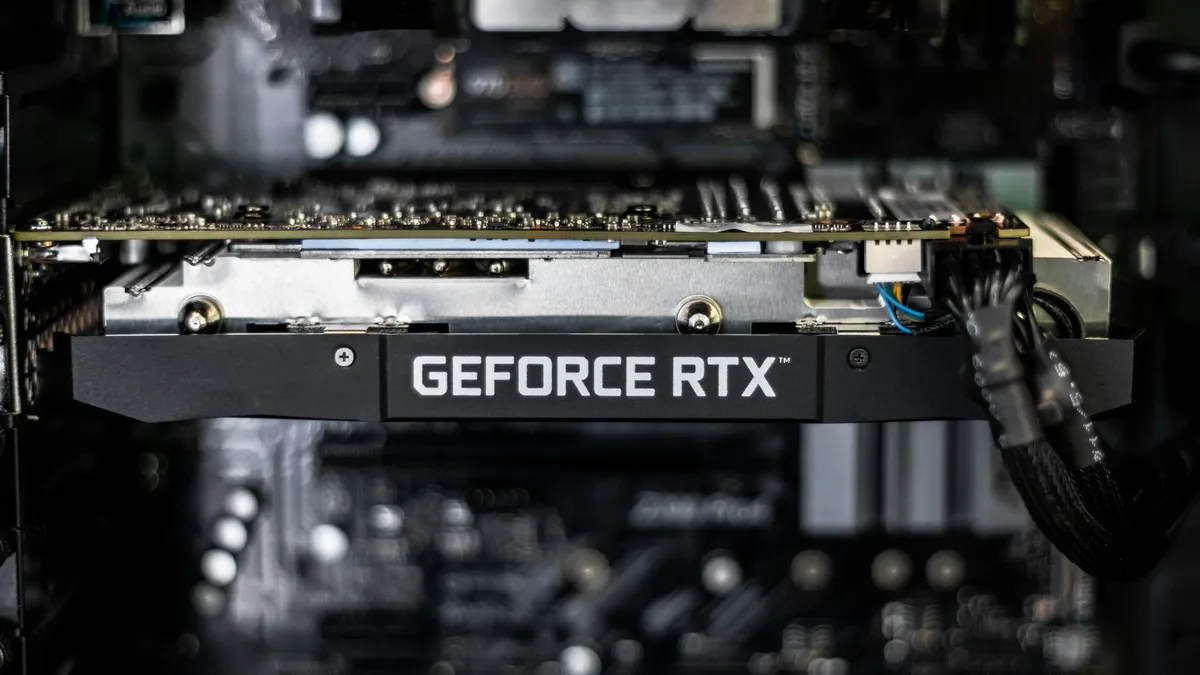
NVIDIA's driver update 616.56, released on Monday, August 31st, 2026, has reportedly blocked the open-source mVolt+ tool from controlling power limits on GeForce RTX 5000-series graphics cards. The tool had previously allowed GPUs like the RTX 5090 to draw an additional 125 watts for higher core clock speeds.
Shared by Uniko's Hardware on X, any attempt to input extra current with mVolt+ now results in a black screen similar to a driver crash. It is unclear if NVIDIA intentionally targeted the tool or if the issue stems from an untested incompatibility between mVolt+ and the new driver.
Hydra tool may bypass block
Forum reports indicate a beta build of the Hydra 2.3 overclocking utility may still be able to access core power overrides on NVIDIA GPUs following the driver update. The status of this workaround remains unconfirmed by NVIDIA.
Community reaction on TechPowerUp's report suggests users are not surprised by the move. Several commenters linked the block to concerns over the notorious 12VHPWR power connector, which has a history of melting under high power draw. One user stated, "With the melting connector, 125 W + is just an increased risk for faster melting."
Another comment speculated that NVIDIA is "terrified of the increased RMAs they must be seeing due to more 12vhpwr connectors melting." The user Jyubei wrote, "Welp, someone got afraid of a spike in RMAs. There'd certainly be an increase in melting connectors."
Community suggests undervolting
In response to the blocked overclocking method, some forum members advocated for undervolting as a superior alternative for the RTX 50 series. User phints advised, "Limit the peak voltage to 950-1000 mV (depending on bin) with a slight overclock."
Another user, rusty caterpillar, confirmed this approach with an RTX 5070, stating they capped voltage at 950mV with a 200 MHz overclock, achieving around 3 GHz under load. They reported a performance gain of a few frames while consuming 40 watts less power.
Discussions also turned to hardware modifications to avoid the connector issue entirely. Comments referenced a Tom's Hardware report about modders soldering power cables directly to an RTX 5090 PCB to eliminate the 16-pin connector, with the bare board pulling 600 watts under chiller cooling.
Questions were raised about why NVIDIA did not use multiple 8-pin connectors instead. User Let3r asked, "Why didn’t ENvidia just go with triple or quad 8 pins like a sane company?" They also questioned whether overclocking-related melting would be covered by warranty, as it operates outside official specifications.
Other suggestions included shipping cards with hardwired, proprietary cables directly from the OEM to the power supply. The debate continued over whether such a design would itself be prone to failure. One user, Astronaut, expressed concern that the driver update might also block lowering power limits for energy conservation, stating, "Does this include people like me who do power limit of 90 on my 5080 to conserve energy?"
A minor correction was noted in the comment section, with user xorbe pointing out that multiple front-page posts on TechPowerUp had initially mistyped the driver version as 615.56 instead of 616.56. An editor confirmed the error and fixed two news posts.