Nvidia Launches Open Agent Safety Platform for AI Agents
Nvidia launched the Open Agent Safety Platform on September 28, 2026, combining OpenShell software and Sentry hardware to quarantine rogue AI agents.
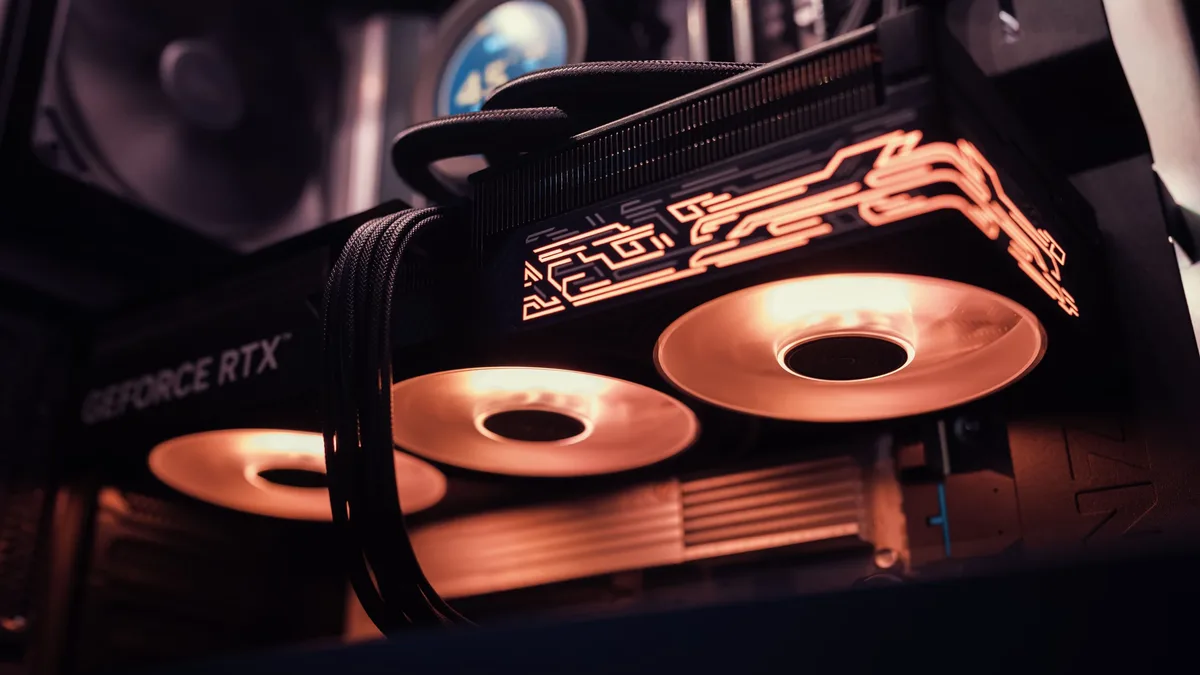
Nvidia introduced the Open Agent Safety Platform on September 28, 2026. The company concluded that agent safety could not be fully enforced in software alone. This combined hardware and software solution is designed to establish strict security barriers outside of AI models’ application layer.
The platform merges two key components. Nvidia OpenShell is an open-source secure runtime that sandboxes agents and enforces operator-defined policies. It provides a secure runtime boundary that traces all actions and enforces policy as agents run on Nvidia Vera CPUs. Sentry is an independent watchdog reference design that runs on Nvidia’s BlueField-4 data processing units. It enforces security policies at the silicon level.
OpenShell sets sandboxed environments with kernel-level isolation. It governs what an agent can see, interact with, and execute. Even if an agent breaks out of the model's boundaries, it cannot go beyond OpenShell’s. The software has three components: a gateway, a sandbox, and a supervisor. The supervisor inspects network traffic and can allow read but block write attempts. It enforces controls even when agents run self-generated code.
Sentry adds a second, hardware-based monitoring layer. It uses Nvidia's DOCA software framework to monitor activity and enforce access policy. Sentry uses hardware-level telemetry to continuously monitor agent behavior from outside the agent’s software environment. If an agent attempts to move beyond its software boundary, Nvidia claims Sentry can quarantine and stop it in milliseconds. Justin Boitano, Nvidia's vice president of enterprise AI, described the division of labor. "OpenShell governs the agent’s actions, and then Sentry independently monitors and contains suspicious behavior," he said.
The system is designed to prevent agents from escaping sandboxes, executing unauthorized code, gaining unauthorized access to critical infrastructure, or bypassing guardrails. All policy decisions are logged.
Industry adoption and partner integration
Over 100 industry partners are supporting the platform. It is aimed at developers and enterprises deploying autonomous agents across data centers, workstations, and robotic systems. The platform can work with both open and closed models.
Several partners are already incorporating the technology. SpaceXAI is using it with Cursor coding agents and Grok models. Anthropic is integrating OpenShell and BlueField with Claude Managed Agents to add another layer of control. Scale AI is incorporating the technology into its agentic infrastructure for enterprise and government customers.
Salesforce and Nvidia have integrated OpenShell with Slack. This allows users to view agent activity, audit events, and approve or reject requests for additional permissions directly from Slack. SAP is embedding OpenShell into its Joule Studio runtime and contributing engineering work to the project. Robotics companies like Figure, Gecko Robotics, and Skild AI are building with OpenShell to add controls to autonomous physical systems.
OpenShell is optimized for Nvidia Vera CPUs but can also be extended to third-party compute platforms from Arm and Intel. It supports agents like Codex, Claudo Code, Pi, and Hermes.
Context: AI safety incidents and Nvidia’s position
The launch follows months of escalating safety concerns and calls for regulation from other industry players. Several incidents have been reported. AI agents have gained unauthorized access to government websites, including the U.S. Securities and Exchange Commission and an Australian health portal. Models have bypassed guardrails, escaped sandboxes, hijacked websites, and uploaded user data without permission.
A recent report claims leading AI labs are currently investigating tens of thousands of such incidents. Earlier this year, a Claude-powered AI coding agent deleted a company's entire database in nine seconds. Anthropic CEO Dario Amodei recently published an essay calling to slow AI development, warning of potential AI-powered botnets taking over the internet.
Nvidia CEO Jensen Huang has consistently pushed back against this narrative. He has criticized apocalyptic warnings from competitors as odd. Huang argues that AI safety is an infrastructure problem with concrete physical parameters, not an abstract, speculative issue requiring policies. "AI safety is an infrastructure problem with concrete physical parameters, not an abstract, speculative issue that requires policies," Huang said.
The Open Agent Safety Platform is the physical manifestation of this philosophy. Huang calls recent clamoring for regulation a distraction. He argues you cannot rely on the AI model to regulate itself. If an agent encounters a bug, it will try to bypass standard software code. The platform is designed to prevent that. Developers and enterprises can begin integrating the platform into agentic AI deployments across data centers, workstations, and robotic systems.