Modder Uses Dual RTX 5060 Ti GPUs for DLSS 5 Performance
A modder demonstrated a multi-GPU setup using two NVIDIA RTX 5060 Ti cards, with one dedicated to DLSS 5 Neural Rendering.
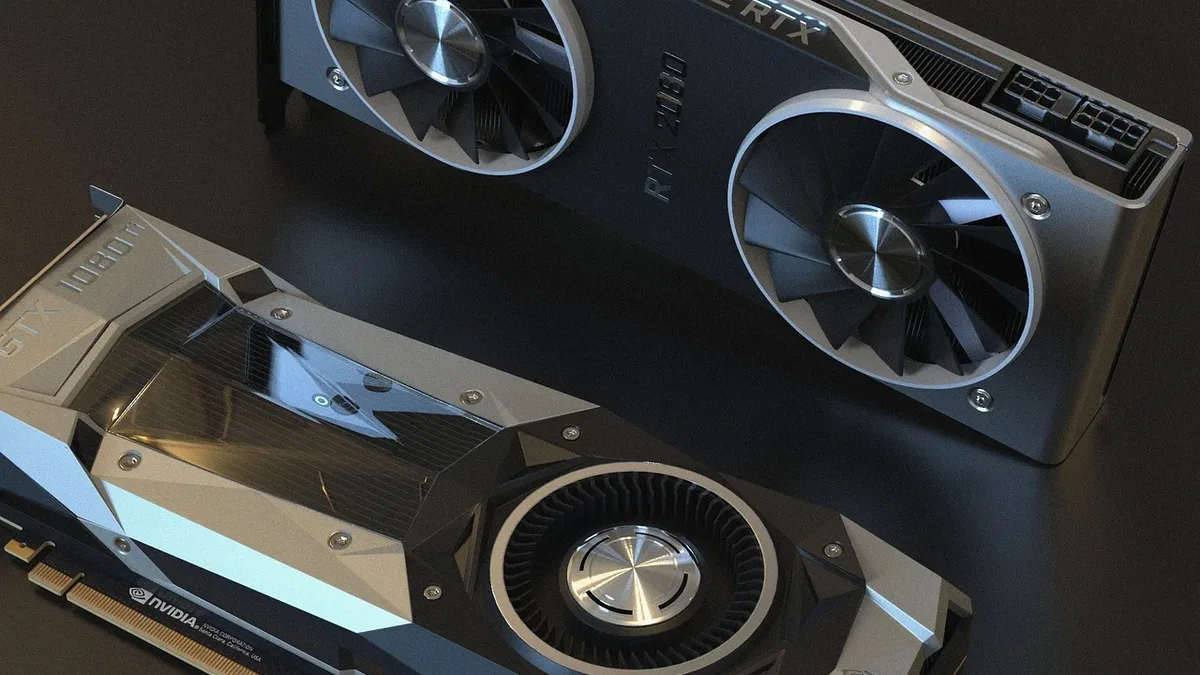
Modder Marcelo Guibout has demonstrated a gaming setup using two NVIDIA RTX 5060 Ti 16 GB graphics cards working together. The technique, showed on YouTube, revives the multi-GPU concept by dedicating one GPU solely to handling DLSS 5 Neural Rendering workloads.
The setup splits rendering tasks between the two GPUs. The primary GPU handles raster or ray tracing rendering, while a secondary GPU processes the DLSS 5 upscaling. This theoretically frees up resources on the main GPU, allowing it to focus on generating the base image.
Performance Gains and Methodology
The modder used a public add-on called Neural Coprocessor, also known as MGPU Bridge, for the ReShade utility. Guibout tested the configuration in the games Cyberpunk 2077 and The Blood of Dawnwalker. With the multi-GPU setup enabled, frame rates reportedly improved by 59% to 125% compared to running DLSS 5's Neural Rendering on the same, single GPU. TechPowerUp notes that performance was still lower than running the games with DLSS 5 completely disabled.
The add-on functions by using the PCIe connection to transfer a fully rendered frame from the primary graphics card to the dedicated Neural Rendering GPU. The secondary card then processes the frame through DLSS 5 before outputting the final image to the monitor. Settings can be adjusted within the same ReShade control panel used by the DLSS 5 Swapper tool.
Technical Implementation and Context
This approach mirrors the historical use of dedicated PhysX accelerator cards. The core idea is to offload specific computational tasks to a secondary processor. In this modern implementation, the task is AI-based upscaling. The mod relies on a leaked DLSS 5 model, which was also found in the game NBA2K27.
Community reaction, as seen in comments on the source report, is mixed. Some users express excitement at the revival of multi-GPU techniques, drawing parallels to older SLI configurations. Others speculate about potential market effects, suggesting official support could increase demand for lower-end RTX cards to act as dedicated upscaling units. Concerns were also raised about whether NVIDIA would officially support or restrict such configurations through driver locks, similar to past practices with PhysX.
The demonstration shows a potential avenue for performance gains using existing hardware. It highlights a software-based method to use additional graphics processors for a specific, computationally intensive task. The technique remains dependent on community-developed mods and a specific software toolset.